A tiered cake looks like a single object and behaves like a relay race. Design hands off to scheduling, scheduling to baking, baking to structure, structure to transport, and a dropped baton at any exchange shows up in the photographs. Couples planning weddings in Salisbury, and anyone ordering a big anniversary or graduation centerpiece, do not need to know how to bake. They need to know the order in which decisions fall due, because most cake stress is a sequencing problem wearing a frosting disguise.
The timeline, stage by stage
- Book the bakery first. For weddings, months ahead in peak season; the date is the asset. A bakery's calendar for May and October Saturdays in North Carolina fills early, and a deposit holds your slot while details stay open.
- Set the serving count. Guest count before design, because tiers are sized by servings. This number drives everything, and it can be refined once, gracefully, well before the day.
- Decide flavors and design. Tastings, photographs, colors from the rest of the event. Different flavors per tier are standard and settle most disagreements.
- Confirm the logistics. Venue, delivery window, who accepts the cake, where it waits, and when it is cut. Outdoor summer timelines get discussed honestly at this stage.
- Final count and final payment. Usually due a couple of weeks out, which is also the last comfortable moment for changes.
- Hands off. The final week belongs to the bakery: baking, filling, settling, stacking. Your remaining jobs are the cake stand, the knife, and a plan for the top tier.
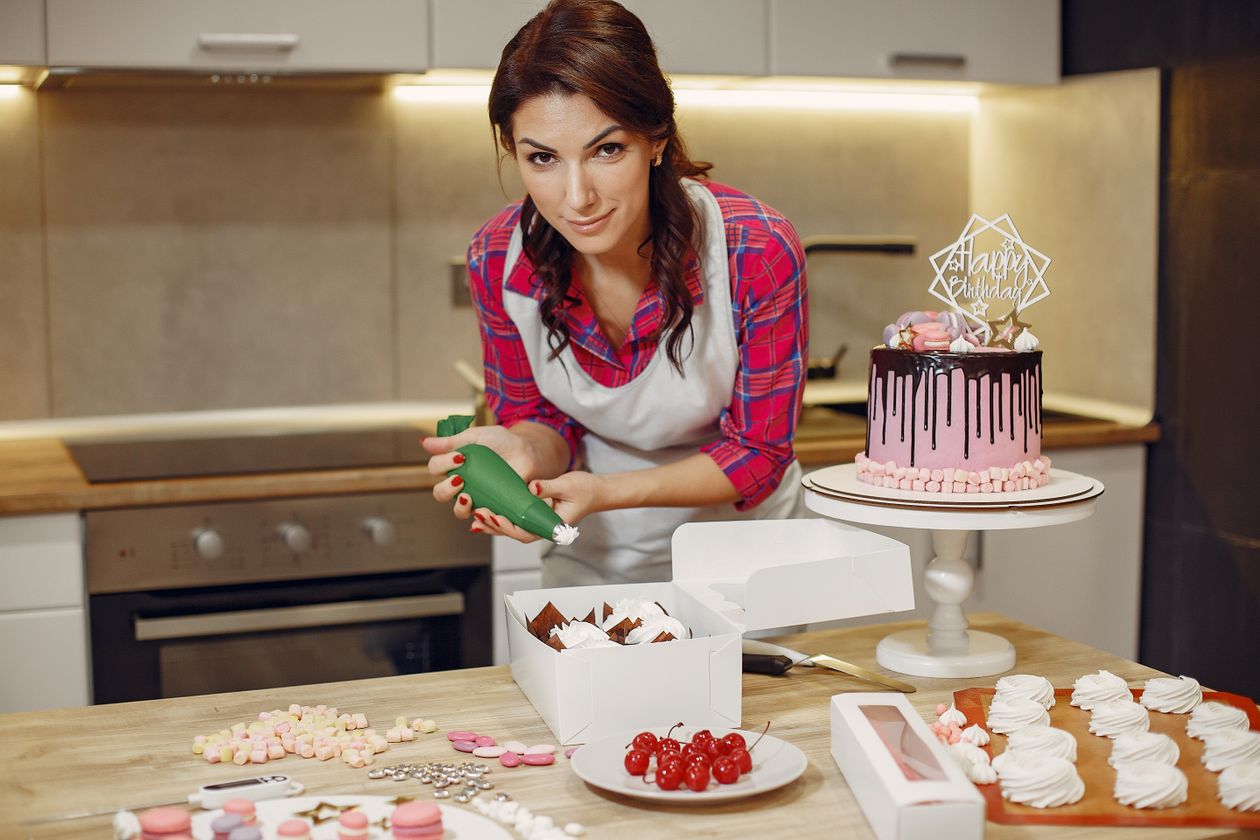
Why tiers need settling time
A tier is not a cake that happens to be stacked; it is a structure. Layers are baked, cooled, filled, and crumb-coated, then given time to settle so fillings firm and air works out. Stack too early and the tiers can bulge at the seams or, worse, compress and lean. Dowels or supports inside carry the weight of the tiers above down to the board rather than onto the cake below, a piece of engineering invisible in the finished piece and entirely responsible for it arriving vertical. This is the practical reason a tiered cake cannot be started the day before the party by any bakery, however talented: the physics has a schedule, and it is measured in days.
Delivery is a professional decision
Large tiered cakes often travel in pieces and are stacked and finished at the venue, or travel stacked only over short, known routes. Ask how your bakery handles delivery and setup, and count professional delivery as money well spent for anything over two tiers: the person who built the cake knows where its weaknesses are, carries the repair kit, and has opinions about which table at the venue is level. Pickup by a well-meaning relative with a sports car is how tiered cake stories get their third act.
Decisions to make early that feel small
Three small decisions reward early attention. Fresh flowers on the cake need coordination with the florist and a food-safety plan, since stems do not go directly into cake unprepared. The cake stand's diameter and sturdiness should be confirmed against the cake's base tier, not assumed. And the cutting plan deserves one sentence in the run of the day: who cuts, with the bakery's or caterer's serving grid in hand, because a tiered cake cut in wedges by a gallant amateur yields half its servings and a great deal of structural commentary. Handle those three in the planning stage and the day itself has nothing left to surprise you with except the flavor.
Budget conversations belong early in this timeline too, held in the plainest possible terms. A tiered cake's cost is servings multiplied by complexity: sugar flowers, hand piping, and sculpted elements are hours, and hours are the honest currency of custom work. Telling the bakery your range at the design stage lets them aim the design at it, trading a simpler finish on a larger cake against an elaborate finish on a smaller one, instead of discovering the mismatch at the final payment stage, when nobody's options are good.
Common questions
How far ahead should a wedding cake be booked in Salisbury?
For peak spring and fall Saturdays, several months ahead is prudent. Smaller parties and off-season dates have more flexibility, but the bakery's calendar is the deciding factor, so the first call should be early regardless.
Can each tier be a different flavor?
Yes, and it is the common practice. It lets a couple honor both preferences and gives guests a choice. Tell the bakery if any tier must serve more people, since flavor popularity is rarely evenly split.
What does the bakery need to know about my venue?
The address, the delivery access and window, where the cake will wait and be displayed, and whether the event is outdoors. Refrigeration space and a level display surface are the two venue features that matter most.
Photos in this guide are representative stock images.
← All guides from Abigail's← Back to Abigail's