The French macaron, not to be confused with the coconut macaroon, which is a different cookie entirely, is the pastry case's small jewel: two smooth almond shells with ruffled feet, sandwiched around ganache, buttercream, or jam. They are the signature at Abigail's in downtown Salisbury, described by the bakery itself as their famous ones, and anyone who has tried to bake them at home understands both halves of that sentence. Macarons are simple in composition and merciless in execution, and the reasons are worth knowing, because they explain what you are tasting when one is right.
Where macarons go wrong, step by step
Start with the meringue. Egg whites are whipped with sugar to precise stiffness: underwhipped and the shells spread and crack, overwhipped and they dry and hollow. Then the dry ingredients are folded in, in the stage bakers call macaronage, and this is the cookie's whole drama in one bowl. The batter must flow like lava, glossy and slow. Ten folds too few and the shells peak and crack in the oven; ten too many and the air is gone, the feet never form, and you have baked almond pancakes. There is no timer for this. There is a ribbon the batter falls in, and knowing it is the job.
Piped shells then rest until they form a skin, which can take twenty minutes on a dry day and far longer when Salisbury humidity is doing its worst, because a shell that goes into the oven still tacky will crack rather than rise into feet. In the oven, the trapped air expands and pushes out the ruffled foot at the base, the macaron's signature, before the shell sets. Every stage has a failure mode with a name, which tells you how many bakers have met each one personally.
What a good one tastes like
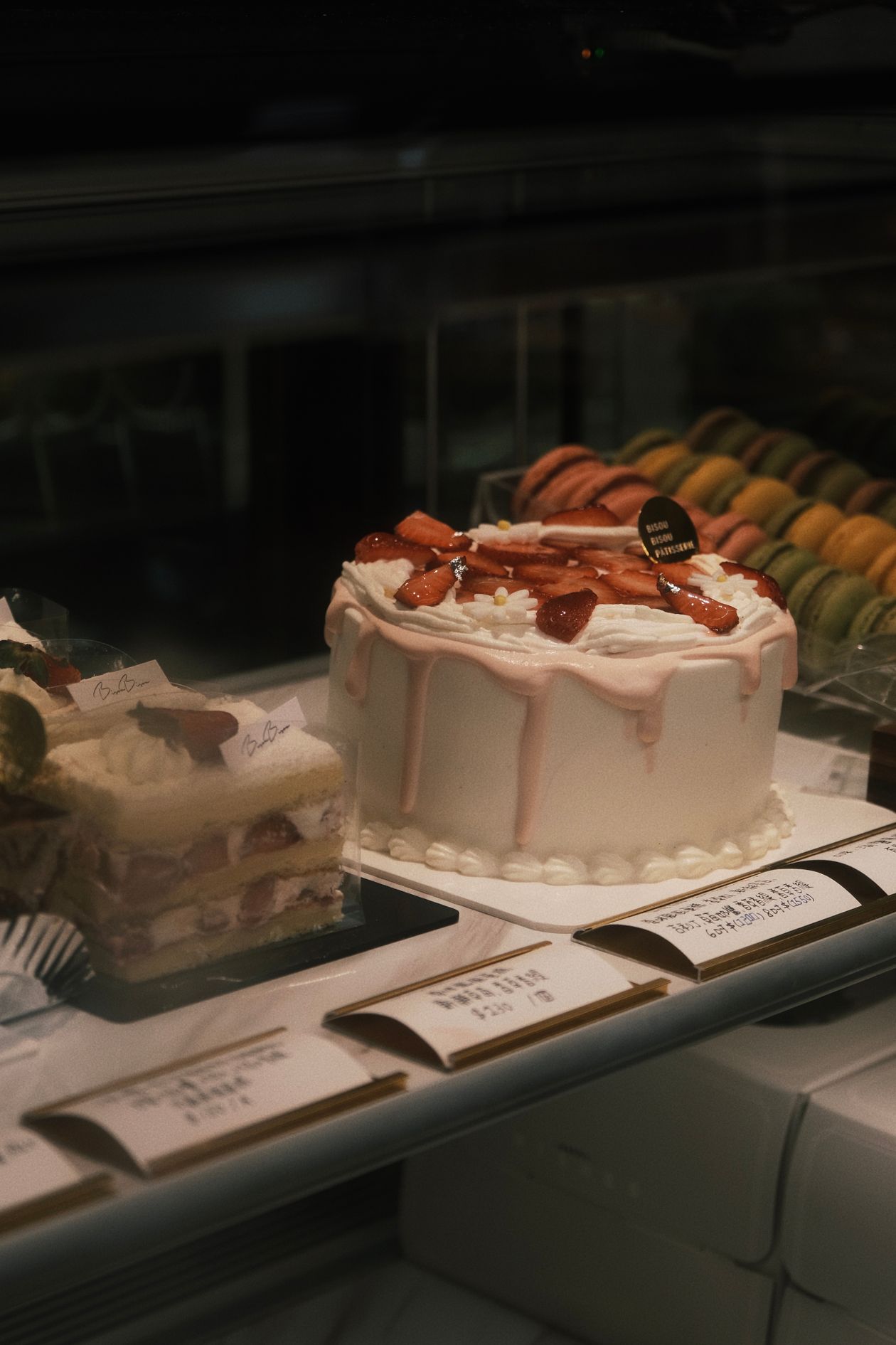
The first bite should crack, faintly, like a thin eggshell, then give into a chewy, moist interior with no hollowness, and finish with the filling, which is half the architecture: a macaron is a filled cookie, and the filling's flavor should be the headline. Texture is a timeline as much as a technique. Fresh from the oven, shells are crisp and dry; filled and rested a day or two in the refrigerator, the shell draws moisture from the filling and reaches the crisp-chewy balance the cookie is famous for. A bakery selling macarons is managing that maturation pipeline daily, which is part of what the price of a small cookie is actually paying for, alongside almond flour's honest cost.
Buying and keeping them
Buy macarons for eating within a few days, keep them refrigerated in an airtight container, and let them sit out twenty to thirty minutes before serving so the filling softens and the flavor opens. They freeze well, which makes a box a reasonable thing to stash before a holiday rather than a gamble at the last minute. And if you have ever wondered why the bakery case holds a dozen flavors on a given day rather than fifty, the answer is the pipeline above: every flavor is its own batch, its own ganache, its own maturation clock. A focused case is a sign of a kitchen keeping up with its own standards, in Salisbury or anywhere else.
Flavor, finally, is where the fussiness pays rent. Because the shell itself is delicate and mildly sweet, the filling can be vivid in a way a big cake slice cannot sustain: sharp lemon, deep salted caramel, intense coffee, real fruit. A bite-sized format tolerates intensity, and good bakers lean into it, rotating flavors with the season and the fruit market. The cookie that seems precious at first bite turns out to be engineered for concentration, which is the last reason the fuss survives: the result justifies the process, at Salisbury counters and everywhere else the cookie is made properly.
Common questions
What is the difference between a macaron and a macaroon?
A macaron is the French almond-meringue sandwich cookie described here. A macaroon is a coconut drop cookie, often dipped in chocolate. Same neighborhood of the dictionary, different pastries entirely.
Why are macarons expensive for something so small?
Almond flour costs what it costs, the labor is skilled and batch-by-batch, and failure rates are real. You are also paying for maturation time: the cookie is sold on the day it tastes best, not the day it was baked.
How long do macarons keep?
Refrigerated in an airtight container, about a week, with the best texture in the first several days. They freeze well for longer storage and thaw quickly in the refrigerator.
Photos in this guide are representative stock images.
← All guides from Abigail's← Back to Abigail's